
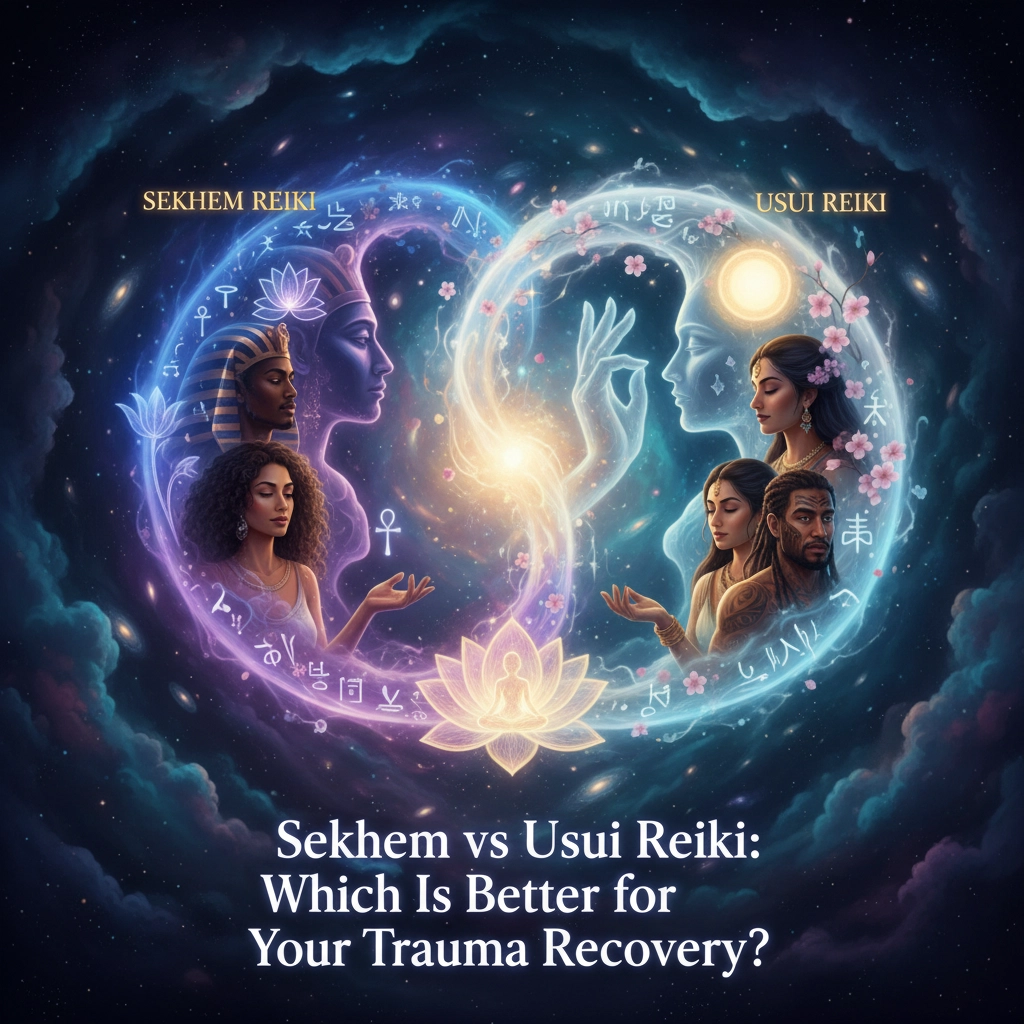
Look, I get it. You're sitting there googling "best energy healing for trauma" at 2 AM because you're tired of carrying all this heavy stuff around. You've probably tried therapy, maybe some medications, and now you're wondering if energy work might be the missing piece. But here's where it gets confusing, there's Usui Reiki, there's Sekhem, and everyone's got opinions about which one's "better."
Let me save you some time and cut through the spiritual fluff. Both Sekhem and Usui Reiki can absolutely support your trauma recovery. The real question isn't which one's objectively better, it's which one's going to work better for you and where you are right now.
The Real Talk About Energy Healing and Trauma
Before we dive into the comparison, let's get something straight: energy healing isn't a magic wand that's going to erase your trauma overnight. What it can do is help your nervous system regulate, release stuck energy from your body, and create space for your natural healing processes to kick in.
Your trauma lives in your body. That's not woo-woo talk, that's science. When you experience trauma, your nervous system gets stuck in survival mode, and that energy has to go somewhere. Sometimes it gets trapped in your tissues, your chakras, your energetic field. That's where both Sekhem and Usui Reiki come in.

Usui Reiki: The Gentle Giant
Usui Reiki is like that friend who holds space for you without pushing. It was developed in Japan by Mikao Usui in the late 1800s, and it works by channeling what they call "universal life force energy" through the practitioner's hands to you.
Here's how it works for trauma:
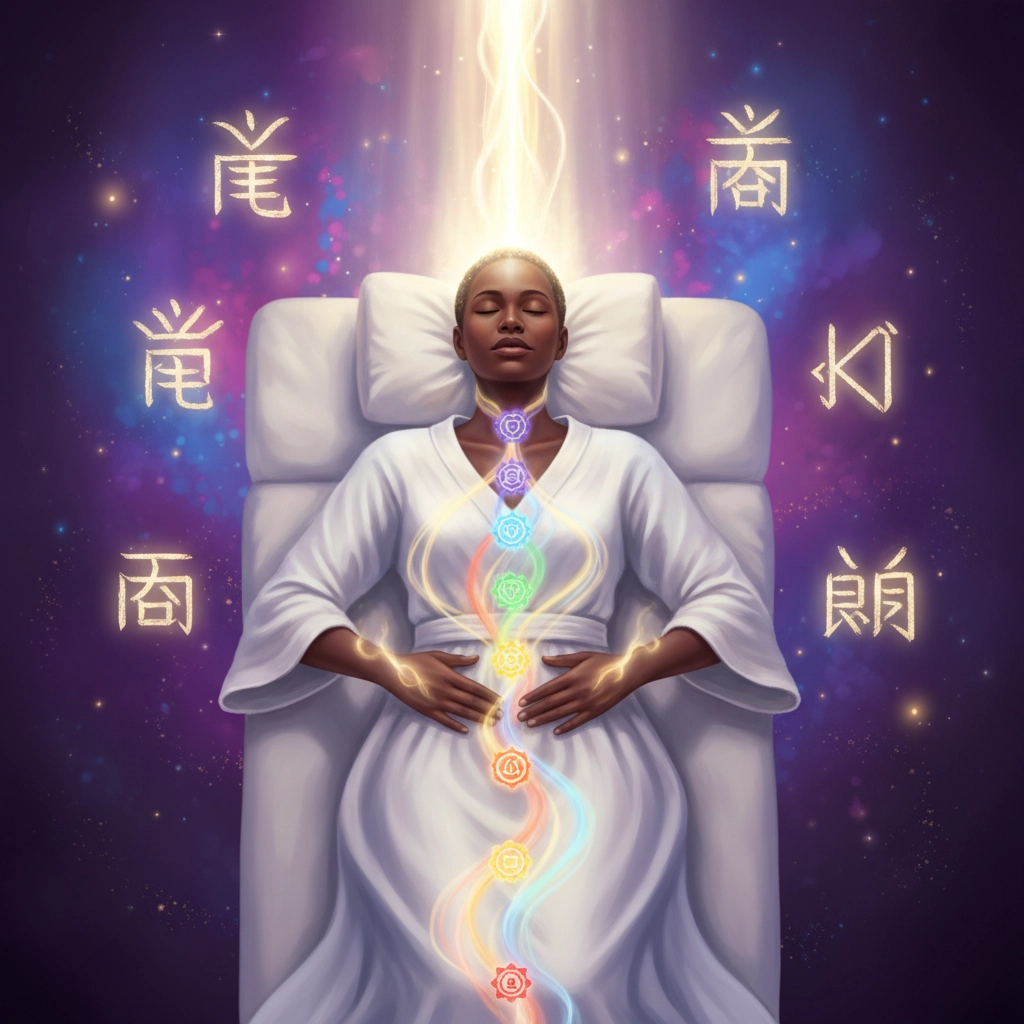
The Top-Down Approach: Usui Reiki starts at your crown chakra and works its way down to your feet. It's moving spiritual energy into your physical body, which means it's grounding you while it heals you. For trauma survivors who feel scattered or disconnected from their bodies, this can be incredibly soothing.
Gentle but Consistent: Think of Usui Reiki like that steady friend who shows up every day with soup when you're sick. It's not going to knock you over with intensity, but it's going to consistently support your system's natural healing processes. You might need more sessions, but you're less likely to get overwhelmed.
Clinical Street Cred: Here's something important, Usui Reiki actually has clinical research backing it up. It's approved for use in hospitals and hospices across the USA and UK. That means if you're working with other healthcare providers for your trauma recovery, they're more likely to understand and support this modality.
Perfect for: People who are highly sensitive, in early stages of trauma recovery, or who prefer a gentler approach. If you get overwhelmed easily or have a history of re-traumatization, Usui Reiki might be your sweet spot.
Sekhem: The Spiritual Warrior
Now, Sekhem (also called Seichim) is like that friend who shows up ready to help you move furniture, no matter how heavy it is. This modality comes from ancient Egypt and is connected to Sekhmet, the goddess of healing and war. Yeah, you read that right, healing and war. That should tell you something about its energy.
The Bottom-Up Revolution: Sekhem works in the opposite direction of Usui Reiki. It starts at your feet and works up to your crown, moving physical energy into higher spiritual dimensions. For trauma that feels stuck in your body, this approach can be incredibly effective at shifting things.
High-Octane Healing: Sekhem operates at a higher vibrational frequency than Usui Reiki. It's more robust, more penetrating, and it gets to the core of energetic blockages faster. Think of it as the difference between a gentle stream and a powerful waterfall, both can carve through rock, but one's going to do it a lot faster.
The Deep Dive: If your trauma feels deeply rooted, if you've been working on healing for a while but feel stuck, Sekhem might be the breakthrough you need. It's designed to reach those stubborn energetic patterns that have been hanging around way too long.
Perfect for: People who are ready for intensive healing work, those who have been stuck despite other efforts, or individuals who respond well to stronger energetic interventions.
The Honest Comparison: What You Really Need to Know
| Factor | Usui Reiki | Sekhem |
|---|---|---|
| Intensity | Gentle, gradual | Strong, penetrating |
| Speed | Slower results, more sessions needed | Faster shifts, quicker results |
| Research | Clinical evidence available | Limited formal studies |
| Approach | Crown to feet (grounding) | Feet to crown (elevating) |
| Best for sensitive people | Yes, very gentle | Maybe, depends on readiness |
| Hospital/clinical acceptance | Widely accepted | Not yet mainstream |
Look, I'm not going to sugarcoat this: there's no "one size fits all" answer here. Your trauma is unique, your nervous system is unique, and what's going to work for you might be completely different from what worked for your friend or that person in the Facebook group.
How to Actually Choose (No BS Version)
Start with Usui Reiki if:
- You're in early trauma recovery
- You get easily overwhelmed by intense experiences
- You want something with clinical backing
- You're working with therapists or doctors who might be skeptical of energy work
- You prefer gradual, steady progress over dramatic shifts
Go with Sekhem if:
- You've been stuck despite other healing efforts
- You're ready for deeper, more intensive work
- You handle intense experiences well
- You're drawn to ancient Egyptian healing practices
- You want faster results and don't mind the intensity
Consider both if:
- You're not sure which approach suits you better
- You want to start gentle and work up to more intensive healing
- You have a practitioner trained in both modalities

The Real Secret: It's About the Practitioner
Here's what nobody talks about enough: the practitioner matters more than the modality. I've seen mediocre Usui Reiki sessions and life-changing Sekhem work, and vice versa. The person channeling the energy, their training, their experience with trauma, their ability to hold space, that's what's going to make or break your experience.
When you're interviewing practitioners (and yes, you should interview them), ask:
- What's your experience working with trauma survivors?
- How do you create safety in your sessions?
- What should I expect during and after a session?
- How do you handle emotional releases during healing work?
Trust your gut. If someone makes you feel unsafe or pushy, keep looking. Your nervous system knows what it needs.
Practical Steps to Get Started
Step 1: Be honest about where you are in your healing journey. If you're still in crisis mode or just starting trauma work, gentle might be better. If you've been working on this for years and feel ready for deeper work, consider the stronger approach.
Step 2: Research practitioners in your area (or online if you're open to distance healing). Read reviews, check their training credentials, and see if they specialize in trauma work.
Step 3: Schedule a consultation call before booking a session. A good practitioner will want to understand your needs and explain their approach.
Step 4: Start with one modality and give it a few sessions before deciding if it's working. Energy healing isn't always immediately obvious: sometimes the shifts happen gradually.
Step 5: Stay connected to your other support systems. Energy healing works beautifully alongside therapy, medical care, and other healing modalities.

What to Expect (The Unglamorous Truth)
Both Sekhem and Usui Reiki can bring up emotions, memories, or physical sensations during and after sessions. This isn't a sign that something's wrong: it's often a sign that stuck energy is moving. You might feel:
- Emotional releases (crying, anger, relief)
- Physical sensations (tingling, warmth, temporary fatigue)
- Vivid dreams or insights
- Temporary mood changes as your system processes
This is normal, but make sure your practitioner prepares you for it and offers aftercare support.
The Bottom Line
You don't have to choose between Sekhem and Usui Reiki forever. Your healing journey is going to evolve, and what serves you now might be different from what you need six months from now. Some people start with Usui Reiki and graduate to Sekhem. Others dive straight into Sekhem and love it. Some people blend both.
The most important thing? Stop overthinking and start doing. Your trauma has been patient enough: it's been waiting for you to give yourself permission to heal. Whether that's through the gentle consistency of Usui Reiki or the warrior energy of Sekhem, the best modality is the one you actually try.
Your ancestors survived incredible things so you could be here. They didn't have access to energy healing, clinical research, or the luxury of choice. You do. Use it.
Ready to stop researching and start healing? Pick the modality that speaks to you, find a practitioner you trust, and book that first session. Your future self is waiting for you to take this step.