

Look, I'm gonna be real with you right off the bat, spiritual cleansing isn't some mystical luxury for people who have their shit together. It's basic maintenance for anyone walking a conscious path. Your energy field picks up residue from every interaction, every crowded space, every emotional vampire you encounter. And if you're not actively cleansing that buildup? You're walking around carrying other people's baggage while wondering why you feel heavy all the time.
The beautiful thing is that cultures across the globe have been figuring this out for thousands of years. From the misty mountains of Japan to the vast expanses of Siberia, our ancestors developed sophisticated systems for spiritual hygiene that put our modern "good vibes only" culture to shame.
Japanese Purification: When Precision Meets the Sacred
The Japanese don't mess around when it comes to spiritual cleansing. Their approach is methodical, intentional, and deeply woven into daily life, something we could all learn from.
Harai is the foundation of Shinto purification, and it's not playing games. This isn't some casual sprinkle-sage-and-hope-for-the-best situation. Traditional harai uses salt, water, and fire with surgical precision to remove impurities before approaching the sacred. The priests don't just wing it, they undergo extensive purification periods that regulate their body, heart, environment, and soul through strict bathing, dietary restrictions, and abstaining from stimulants.
Think about that for a second. They're treating spiritual cleansing like the serious practice it is, not some weekend hobby.
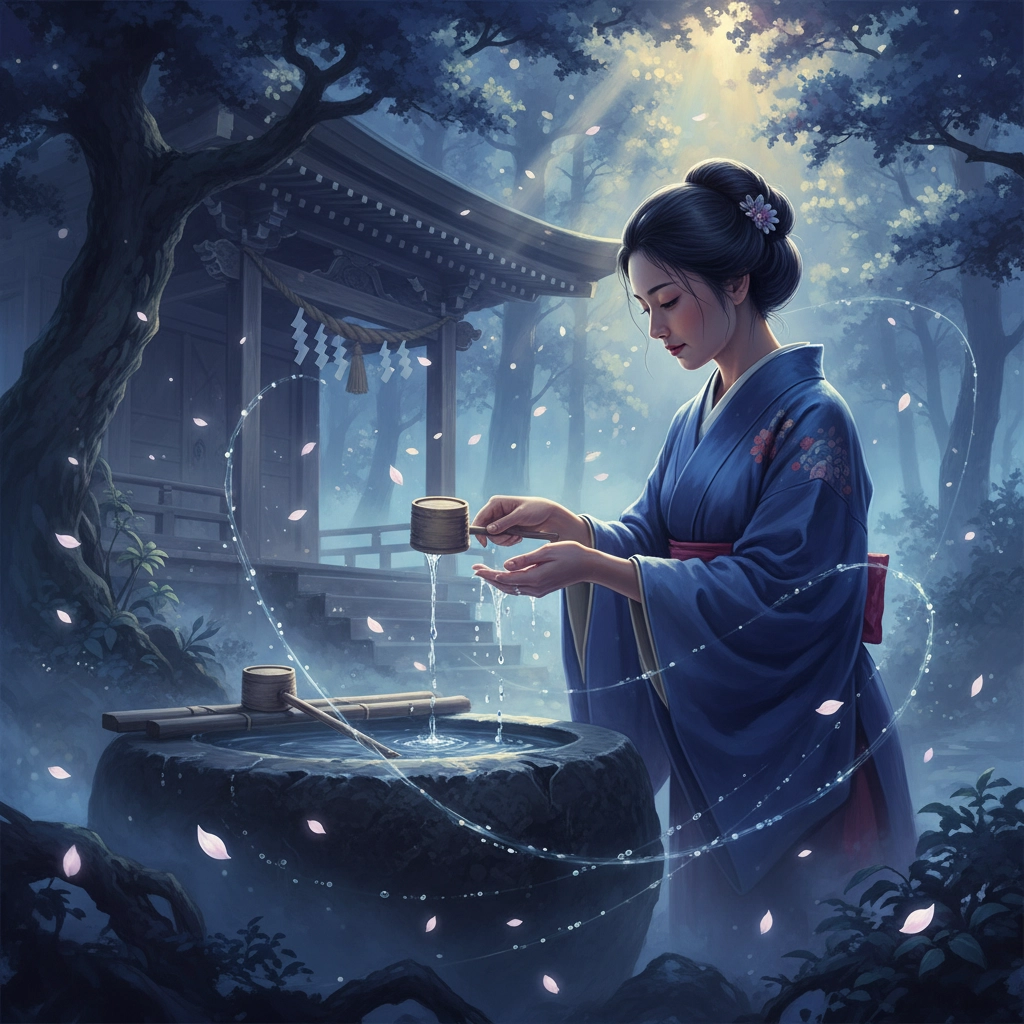
The temizu ritual at shrine entrances gives us a perfect template for daily practice. You wash your hands, rinse your mouth, and symbolically remove worldly concerns before entering sacred space. It's simple, accessible, and takes maybe two minutes. But here's the thing, those two minutes create a boundary between your everyday chaos and your spiritual practice.
Misogi and mizugori take it to another level entirely. We're talking full-body immersion in freezing cold water, sometimes in the middle of winter. These aren't gentle self-care baths, they're ascetic practices that use physical challenge to achieve spiritual transformation. The cold water doesn't just cleanse symbolically; it shocks your system into presence and strips away everything that isn't essential.
Now, I'm not saying you need to jump into a frozen river (though if you're called to that kind of intensity, more power to you). But there's wisdom here about using discomfort as a gateway to transformation. Sometimes spiritual cleansing requires more than lighting a candle and hoping for the best.
The Sacred Art of Japanese Bathing
Here's where Japanese wisdom gets really practical for modern life. Onsen (hot spring baths) and sento (public bathhouses) aren't just about getting clean, they're spiritual sanctuaries that integrate physical, emotional, and energetic healing.
The Japanese understand something we've forgotten: physical cleanliness intertwines with the health of the soul. When you step into hot mineral water with the intention of release and renewal, you're not just soaking your muscles. You're creating space for tension to dissolve, for emotional processing to happen naturally, and for your nervous system to reset.
This isn't complicated. Fill your bathtub with intention. Add some salt, sea salt, Epsom salt, whatever you have. Set a boundary with your phone, your to-do list, your mental chatter. Let the water do the work it's designed to do.
Fire Purification: When You Need to Burn It All Down
Japanese fire ceremonies take cleansing to a whole different realm. Yamabushi mountain ascetics walk across hot coals after sprinkling salt, combining fire's transformative power with salt's purifying qualities. This isn't performance art, it's a demonstration that some impurities require extreme measures to release.
Festival participants bathe in frozen waters, then undergo further purification through fire, with burning straw torches used to cleanse the air itself. Water prepares the practitioner; fire opens the door to the other world.
You don't need to walk on fire (please don't try this at home), but you can work with fire energy for deep cleansing. Light a candle with intention. Burn old letters, photos, or anything that represents what you're releasing. Let the flame transform what water couldn't dissolve.

Siberian Shamanic Wisdom: Ancient Power in Modern Times
Siberian shamanic traditions represent some of the oldest spiritual systems on the planet, predating organized religion by thousands of years. While specific cleansing techniques aren't as documented as Japanese practices, the underlying principles are profound: purification creates proper conditions for encountering the divine.
Siberian shamans understand that spiritual cleansing isn't separate from healing work, it's the foundation that makes all other spiritual practice possible. They work with the elements, with sound, with movement, recognizing that your body is the temple that needs tending.
Common Threads: What Every Tradition Knows
Here's what's fascinating, whether we're talking about Japanese harai or Siberian shamanic practice, certain principles show up everywhere:
Water cleanses and prepares. Every tradition uses water for purification, from ritual washing to full immersion. Water carries away what no longer serves.
Fire transforms and opens. Fire doesn't just cleanse, it alchemizes. It burns away the old to make space for the new.
Physical practice creates spiritual results. These traditions don't separate body and spirit. They use physical discomfort, repetition, and endurance to achieve energetic shifts.
Intention matters more than perfection. The power isn't in getting the ritual exactly right, it's in showing up with clear intention and respect for the practice.
Practical Integration for Your Modern Life
Listen, I know you're not about to become a mountain ascetic or start fire-walking in your backyard. But you can absolutely integrate these principles into your daily routine without completely upending your life.
Start with water: Create a simple temizu-inspired practice. Before spiritual work, wash your hands with intention. Rinse your mouth. Set a clear boundary between ordinary time and sacred time. This takes two minutes and changes everything.
Weekly deep cleansing: Once a week, take a proper cleansing bath. Add salt, set an intention to release what's not serving you, and actually let yourself feel the water pulling away energetic residue. Don't rush this. Your ancestors didn't hurry through their purification rituals, and neither should you.
Work with fire safely: Light a white candle before energy work. Burn sage, palo santo, or incense with intention. If you need to release something specific, write it down and burn the paper safely in a fireproof bowl. Let the smoke carry away what you're ready to release.
Sound cleansing: Ring a bell, sing, or use a singing bowl to clear stagnant energy from your space. Sound breaks up energetic density and creates movement where there was stagnation.

Enhancing Your Reiki Sessions
If you're working with Reiki: whether giving or receiving sessions: these cleansing practices can dramatically enhance the effectiveness of your energy work.
Before sessions: Take a moment for ritual washing. Even if it's just mindfully washing your hands while setting an intention to be a clear channel for healing energy. Your preparation matters as much as the technique itself.
Space clearing: Use sound, incense, or simply opening windows to clear the energy of your healing space between clients. Don't let one person's releasing energy affect the next person's session.
After sessions: Have a protocol for releasing any energy that isn't yours. This might be a quick salt scrub in the sink, lighting incense, or simply setting the intention to return any foreign energy to the earth for transformation. Your energetic hygiene protects both you and your clients.
The Reality Check You Need
Here's what nobody wants to tell you: spiritual cleansing isn't always comfortable, and it's not always gentle. Sometimes what needs to be cleared has been stuck for years. Sometimes the process brings up emotions, memories, or sensations that you'd rather avoid.
That's not a sign you're doing it wrong: that's a sign the cleansing is working.
The Japanese don't promise that misogi will be pleasant. They promise it will be effective. The Siberian shamans don't sugarcoat the process. They understand that real transformation requires real commitment.
You don't need to suffer unnecessarily, but you do need to be willing to feel what's moving through you as it leaves. That's the price of genuine spiritual hygiene.
Start Where You Are, But Start Now
Your ancestors didn't have the luxury of waiting until they felt ready for spiritual practice. They understood that readiness is something you create through showing up, not something you wait to feel.
Pick one practice from this article. Start small, but start consistently. Spiritual cleansing isn't a one-time event: it's a way of life.
The beautiful thing about working with water, fire, salt, and sound is that these elements are available to everyone. You don't need special training, expensive tools, or perfect conditions. You just need the willingness to tend to your spiritual hygiene with the same consistency you bring to brushing your teeth.
Ready to stop carrying everyone else's energy around like a pack mule? Light that candle, run that bath, and start treating your spiritual cleansing like the essential practice it is. Your energy field: and everyone who interacts with it( will thank you.)